
Irish to the core: how Chicago social thought has shaped Pope Leo XIV
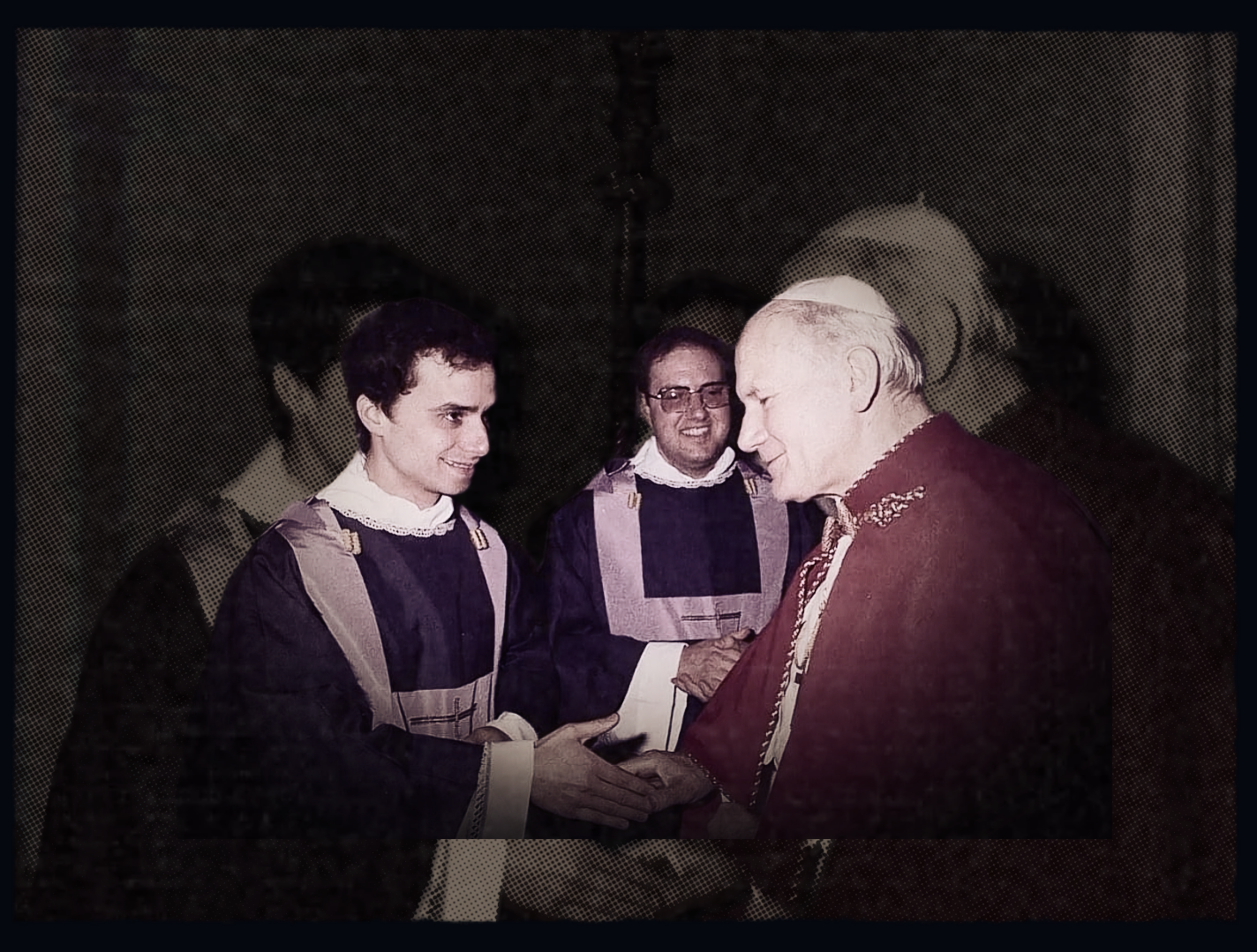
The Irish world of Pope Leo's upbringing
Cardinal Robert Provost’s election as Pope last year was a unique moment. In large part, this is, of course, due to his American (and Midwestern ethnic) roots. As more information emerged about his Chicago connections, the imprint that Illinois’ great capital city left on the new Pope became clearer and clearer. Aside from his public expression of support for the White Sox, neighbours and friends have consistently described him as a proud Chicagoan:
“A classmate of Pope Leo XIV recalled that he ‘is a man formed by his experience in the church of Chicago, especially the South Side’” (Time).
The shock of his victory was strongly felt by his native brethren in the Catholic enclaves of the great Windy City:
"Nowhere does the election of the first American pope feel more surreal than in his native Chicago, where his family and friends knew him simply as 'Bob.'" — “How Chicago Shaped Pope Leo XIV,” Time Magazine.
Hearing of a Bob Francis from the South Side, it was no doubt a disappointment for many of us to learn the new Pope had no Irish ancestry. But fear not, upon closer inspection, the evidence begins to show that his worldview stems from a deeply Irish world and social network.
For starters, Irish Catholicism literally brought baby Provost into the world on the day of his birth. He was born at Mercy Hospital, which was founded by the Irish Sisters of Mercy. Perhaps his mother would have trusted such an Irish Catholic institution, owing to her work for the Holy Name Cathedral, a wonderful monument of the diaspora, itself dedicated to an Irish immigrant (Thomas Foley) and designed by a man from Thurles, County Tipperary (Patrick Keely). Another architectural Irish link was in the local family church, Saint Mary of the Assumption, which was commissioned by Archbishop Patrick Feehan.
Not only were the physical institutions of his youth literally built by Irish-Americans, but so too was the vocational power structure spiritually developed by them. The obvious example is when he was ordained as a priest. He entered the Chicago diocese, which had been led for the previous 20 years by Cardinal John Cody, a second-generation Irish immigrant. With the vast numbers of Irish immigrants in the city, this was really the norm up until recently.
Out of the first six bishops of Chicago, all but one were of Irish extraction. Of those five, only James Quigley (1903–1915) was born in the Americas, while William J. Quarter (1844–1848), Anthony O'Regan (1854–1858), James Duggan (1859–1880), and Patrick Augustine Feehan (1880–1902) were all children of Irish soil. One can imagine the impact this ethnic immigrant experience had on the doctrine and social thinking of these Chicagoan leaders. While fiercely patriotic, they developed a uniquely progressive and human-oriented social focus, based on the rights of labour and community solidarity, themes which no doubt spoke to the young future Pope.
Catholic labour and Chicago social teaching
As Bob grew older, the latent socially conscious formulation of his regional church matured as well. From the messy ethnic enclaves of the industrial 19th century, the 20th century saw the city’s Catholic leaders formulate a theory of social action rooted in their immigrant experience and concerns about rampant individualism. The most prominent example of this is Fr. Reynold Henry Hillenbrand (1904–1979), a leader in the liturgical movement and Catholic Action. He rose to prominence particularly in the post–New Deal era and later during Vatican II.
While not of Irish extraction, his advocacy was heavily influenced and shaped by the group often referred to as “Hilly’s men.” These figures helped emphasize Catholic arguments for the rights of organized labour, as well as the necessity of ensuring family solidarity and protection—whether through minimum wage or improved working conditions. Looking at the list of some of the most prominent among them, a certain ethnic group dominates: John Joseph Egan (1916–2001), Thomas Joseph Grady (1914–2002), George G. Higgins (1916–2002), and Cletus F. O'Donnell (1917–1992).
As their philosophy developed, they were clearly conscious of the threat posed by capitalist, individualist, and liberal exploitation of the poor. In contrast, they articulated a corporatist social system, based on that which is most human and most organic—the family. After helping to organize the 1926 Eucharistic Congress in Chicago, Hillenbrand sought to fully delineate a theory to combat the widespread poverty of Chicago’s slums — poverty much like that of the working-class enclaves of Pope Leo XIV’s former Peruvian parish. In his diagnosis, liberal individualism was the family’s greatest threat:
"People the world over are sick of individualism, of being sundered from others, of the tragic loss which comes from thinking and acting alone. They are sick of individualistic, subjective piety because it lacks depth and vision. They are sick of the individualism that has undone so many homes... sick of the stinking individualism in our economic life that has denied to the worker his rightful place in industrial life; sick, above all, of the individualism in international life that has left the world a shambles." From (Avella, 1990, “Reynold Hillenbrand”, p. 363.)
This is what I call Chicago social teaching: a play on Catholic social teaching. It is a worldview steeped in defence of the working man, families, and social solidarity against the rapacious free-for-all of individualistic capitalism.
As a brief aside, it is worth acknowledging that this ideology was occasionally associated with questionable, opportunistic, or at the very least anti-Catholic forces. These individuals and groups often abandoned the corporatist aspects of the tradition. Saul Alinsky is the prime example. With the decline of the hostile, Anglophilic WASP elite, many Irish Chicagoans collaborated with fellow ethnic minorities in a form of organized grievance politics. While understandable in many of their complaints and goals, this likely hurt organized Catholic power more than it helped in the long run.
With this in mind, we should hope Pope Leo XIV can combine the traditionalism of his Augustinian order with an awareness of the modern world, with all its technological and social revolutions. Perhaps only a man from the South Side, the most progressive and urban of metropolises, is properly suited to lead a spiritual and social cleansing of our modern socio-technological system.
AI and the new socio-technological revolution
From the outset, the Pope has emphasized the moral crisis of the modern world. In particular, he has situated our current epoch of socio-technological transformation as a continuation of earlier crises:
"In our own day, the Church offers to everyone the treasury of her social teaching in response to another industrial revolution and to developments in the field of artificial intelligence that pose new challenges for the defense of human dignity, justice and labor." — Pope Leo XIV
Artificial intelligence is seen here as yet another threat to human freedom and authenticity, just as the Industrial Revolution once was. Dr. Stephen Umbrello emphasizes the implicit humanism in Pope Leo's approach to AI:
"By inheriting Francis’s foundational work and invoking Leo XIII’s legacy, Pope Leo XIV appears to be framing AI as the defining social mission of the Church in this generation—one that will require moral reflection, bold evangelization, and concrete action for the sake of the human person." — “Pope Leo XIV and the New Social Question of AI”, Stephen Umbrello, World on Fire
This emphasis on the human person and the authenticity of the human body is part of a long-standing Catholic humanism. Pope Francis, in his writings on the Sacred Heart, continued this tradition. The late Pope spoke of this most beautifully in his final encyclical, Dilexit Nos (He Loved Us), written in 2024 and subtitled “On the Human and Divine Love of the Heart of Jesus Christ.” He argued, in heavily Proustian language, that artificial substitutes can never replace the human heart, the keeper of our beloved memories:
"In this age of artificial intelligence, we cannot forget that poetry and love are necessary to save our humanity. No algorithm will ever be able to capture, for example, the nostalgia that all of us feel, whatever our age, and wherever we live, when we recall how we first used a fork to seal the edges of the pies that we helped our mothers or grandmothers to make at home. It was a moment of culinary apprenticeship, somewhere between child-play and adulthood, when we first felt responsible for working and helping one another."
Whether it be poetry, the family, or social solidarity; all that is precious in human life requires a radical authenticity and rootedness in our local places and family environments. This is the antidote to rootless individualism and technological enslavement. An ecological consciousness of what is most human, loving, and steeped in our past:
"Along with the fork, I could also mention thousands of other little things that are a precious part of everyone’s life: a smile we elicited by telling a joke, a picture we sketched in the light of a window, the first game of soccer we played with a rag ball, the worms we collected in a shoebox, a flower we pressed in the pages of a book, our concern for a fledgling bird fallen from its nest, a wish we made in plucking a daisy. All these little things, ordinary in themselves yet extraordinary for us, can never be captured by algorithms. The fork, the joke, the window, the ball, the shoebox, the book, the bird, the flower: all of these live on as precious memories 'kept' deep in our heart."
Seen this way, AI is the apex of technological society's encroachment on one of the central messages of the Christian religion. Unlike Islam's dualistic submission, Judaism's ethnic particularism, and Paganism’s atavism, the Christ is deeply integrated with the flesh. Catholic writers from Simone Weil to Jacques Ellul have explored this at length. For the new generation of Catholic leaders, one wonders whether the Irish, whether in the homeland or the United States, could lead the way in articulating a rooted, traditional, and socially conscious alternative to our prevailing socio-technological dystopia.
The future of urban Catholic politics
Due to Pope Leo's relatively young age (69), we are in the very early days of what may be a long episcopate. What form this reign will take will naturally come with surprises, but based on the themes discussed in this essay, we can venture a hunch.
An explicit, socially conscious theory appears to be the main theme to expect. This, of course, is rooted in Pope Leo's ethnic Chicago upbringing, as well as broader Catholic influences. Never has it been more urgent for Catholics globally to have a holistic economic worldview, in the U.S. as in Ireland in particular. Most likely, we can expect a papal encyclical in the tradition of Rerum Novarum and Quadragesimo Anno, along with Laborem Exercens to a lesser extent. This would be a work tackling the proper Catholic role in warning against, and regulating, the expansion of destructive technologies, with runaway AI as the main antagonist.
Thankfully, Irish Catholics, both in our island and in the U.S. (Chicago in particular), could play a large role in shaping this conversation. We can draw on the long history of Irish contributions to the world of Catholic social thought.