The Ulster-Brit
This article was originally featured on Cennétig’s Substack and is reproduced with his permission.
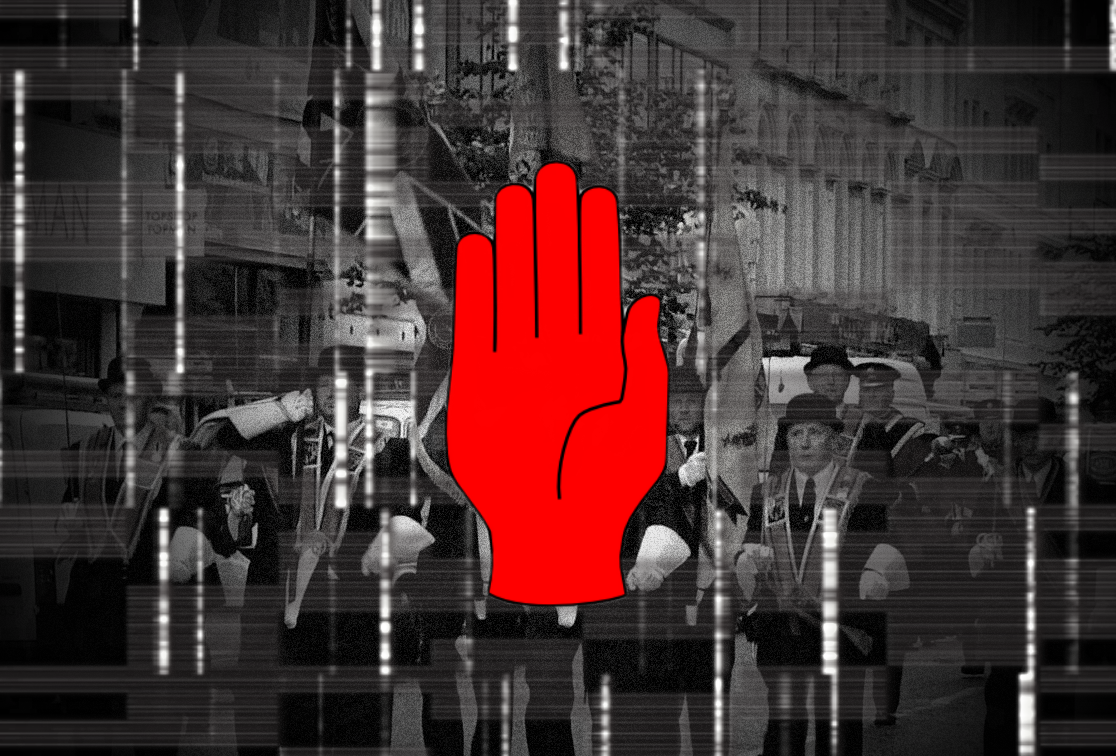
Ireland has a centuries long history of being a multi-ethnic Island. The native Irish were first invaded by the Vikings, then the Normans, and then a further wave of British planters in the 16th and 17th century to subjugate the Catholics. The Vikings and the Normans eventually assimilated, but a large portion of the descendants of the British planters haven’t. Those that haven’t are known as the Ulster-Brits.
This group of 800,000 or so people are British people living in Ulster, or rather the 6 counties of Ulster. They are British in every way: ethnically, culturally, and even legally. The fact that they live in Ireland doesn’t make them Irish, in the same way the fact that they don’t live in Britain doesn’t make them any less British. In fact they attach themselves to the British identity stronger than those living in Britain.
This inflated nationalism is a common trend among colonists who are numerically outnumbered by the natives. It is the ideology that maintains their position of supremacy over the natives and creates a strong barrier to members assimilating to native culture.
Irish denial of the existence of the Ulster-Brit
The acknowledgement that there exist an Ulster-Brit people in the North East of Ireland is obvious to any unbiased outside observer, but not to the establishment national movement in Ireland. This clip of Gerry Adams from 1982 illustrates this mindset held by Irish nationalists. Gerry Adams misrepresents Ulster-Brits as a group that just hold a “political opinion,” in the same way that Fianna Fáil voters could be classed as a political group.
The interviewer then goes on to state the obvious fact that they are a different people. Gerry Adams is baffled by this statement and proceeds to construct this make-believe contradictory reality of how they are “as oppressed as we are” and at the same time they only give allegiance to Britain “as long as the English crown protects the protestant ascendancy.” So the Ulster-Brit is both oppressed by the British state, but is also given an ascendancy position by the British state. Which one is it?
This ethnic denial of the Ulster-Brit is widespread throughout the history of the national movement. This acceptance that the Ulster-Brits exist as a distinct people on our Island is known as ‘Two nations theory.’ John Redmond describes this theory as an “abomination and a blasphemy.” Seán Lemass called the theory “absurd.” Tomás Mac Giolla described it as capitulation to “British Imperialism.” Only a few nationally minded thinkers like Desmond Fennel accept the reality of the Ulster-Brit.
Forming of the Ulster-Brit identity
The Ulster-Brit is a product of his historical roots in Britain and of the political changes that occurred in Ireland for the past 250 years ago. Before partition, there arguably existed in Ireland three peoples: the native Gael, the Anglo-Irish, and the Ulster-Scot. The native Gael was in the majority in all except the North East of the Island and held on to its Catholic faith throughout centuries of British persecution and oppression.
The Anglo-Irish were descended from England and formed the upper-caste of Irish society for centuries. They were dispersed throughout Ireland as wealth was tied to the land, but maintained a strong presence in the Dublin region due to it being the centre of political power in Ireland. The Anglo-Irish followed a more typical colonial African pattern of being a dispersed minority in all regions of the country and maintaining the mono-class identity of being exclusively in the upper classes.
The Ulster-Scot in comparison followed the settler colonial pattern seen in Australia or Northern America of ethnically cleansing the natives from the land and being a majority in a certain region. Due to this pattern Ulster-Scots occupied positions in all classes from the farming and industrial class to the upper-classes—although the Anglo-Irish disproportionately crowded out the upper-classes. The Ulster-Scots were, as the name suggests, descended from Scotland and settled in the Ulster region.
The Ulster-Scot and the native Gael were once allied with each other against the Anglo-Irish during the Irish rebellion of 1798. Both groups were second-class citizens to the Anglo-Irish and sought to create a Green-Orange alliance to overthrow the Blue. This rebellion failed and the alliance was never to be seen again. Once the national movement started to pick up steam in the 19th century, the Ulster-Scot, not being oppressed by the Anglo-Irish no more, reverted back to their ethnic British loyalties. The Scot realised the Anglo was more close to him than the Gael.
This new Orange-Blue alliance wanted to maintain the union with Britain with the whole of Ireland but eventually had to settle on just the 6 counties of the North East. They went from being Irish unionists to Ulster unionists.
The Anglo-Irish and the Ulster-Scot since partition begun a slow process of assimilation and intermingling to create a new people known to us now as the Ulster-Brit. The old distinctions between these two ethnic groups begun to fade, leaving only their religious allegiances to the Anglican or Presbyterian church as an remnant of their lineage. The old Anglo-Irish leadership of the Ulster-Brit people still maintained itself well throughout the 20th century. Four out of the six Prime Ministers of Northern Ireland came Anglo-Irish stock and the other two, James Craig and J. M. Andrews were deeply anglicised. Both Craig and Andrews had a distinct Anglo-Irish accent.
Politics of the Ulster-Brit
The politics of the Ulster-Brit like all peoples is on a spectrum. Their traditional politics have revolved around a staunch anti-Catholicism and triumphalism over the native population, British supremacy, minimal regard for civil liberties being applied to the natives, and an unflinching belief in the union with Britain.
Recent developments of this supremacist culture to fit contemporary circumstances have included policies like maintaining the denial of the language rights of the native population and their attempt to block the state from funding Irish sport.
A recent poll asked Ulster-Brits if Irish language street signs were put up where they live would make them more or less likely to move house. A majority said they would be more likely to move. This an extreme level of bigotry that is completely unparalleled anywhere else in the European World. No other settler people in the greater European world would show this level of distain for native cultures, no matter how primitive they may be. Even in our current culture of hyper-awareness of all racial bigotries, whether real or imagined, the blatant racist opinion expressed by a majority of Ulster-Brits against the native Irish people goes completely unchecked.
The derelict state of Casement Park is one of the clear examples of the Ulster Brits insistence that the sport the natives play shouldn’t be supported by the state. Examples like these show that Ulster-Brits still hold on to the old strategy of oppressing the natives as means to maintain the union. The contrary strategy of trying to reach out to the native Irish and making them see the benefit of the union by treating them as equals and making right the wrongs of the past is mostly overlooked.
A growing section of the Ulster-Brit population have taken a more conciliatory approach to the native population, which can be seen in the recent rise of the Alliance Party. Their vote share has gone from 6.6% in 2014 to 13.3% in 2023. The Alliance Party was founded by Ulster-Brits in 1970 as an alternative to the politics of British supremacism typical of Ulster-Brits up until then.
The spectrum of Ulster-Brit politics is from the liberal Alliance Party on the one side and the supremacist parties of the Ulster Unionist Party, Democratic Unionist Party, and the Traditional Unionist Voice on the other—with the UUP being the least and the TUV being the most supremacist.
Future of the Ulster-Brit
The Ulster-Brit will continue on with the narrow backwards-looking distain of all things Irish until they wake up one day in a United Ireland. On that day they will hope that the Irish won’t treat them the same way they have treated the Irish for the past 800 years. The Irish will not only treat them as equals but will probably bend over backwards to excuse their past of supremacy and terrorism, and go out of their way to promote them to positions of power. Those of the Ulster-Brit population that can’t accept that the natives now have control over their country once again will flee back to their co-ethnics in Britain.
Those that will remain will be the liberals who are most readily eager to assimilate into Irish society. A century after unification, the Ulster-Brit as a group may be no more, and will be absorbed into the fold by Gael like the Vikings and Normans of the past.