
Felis catus: The Domestic Cat
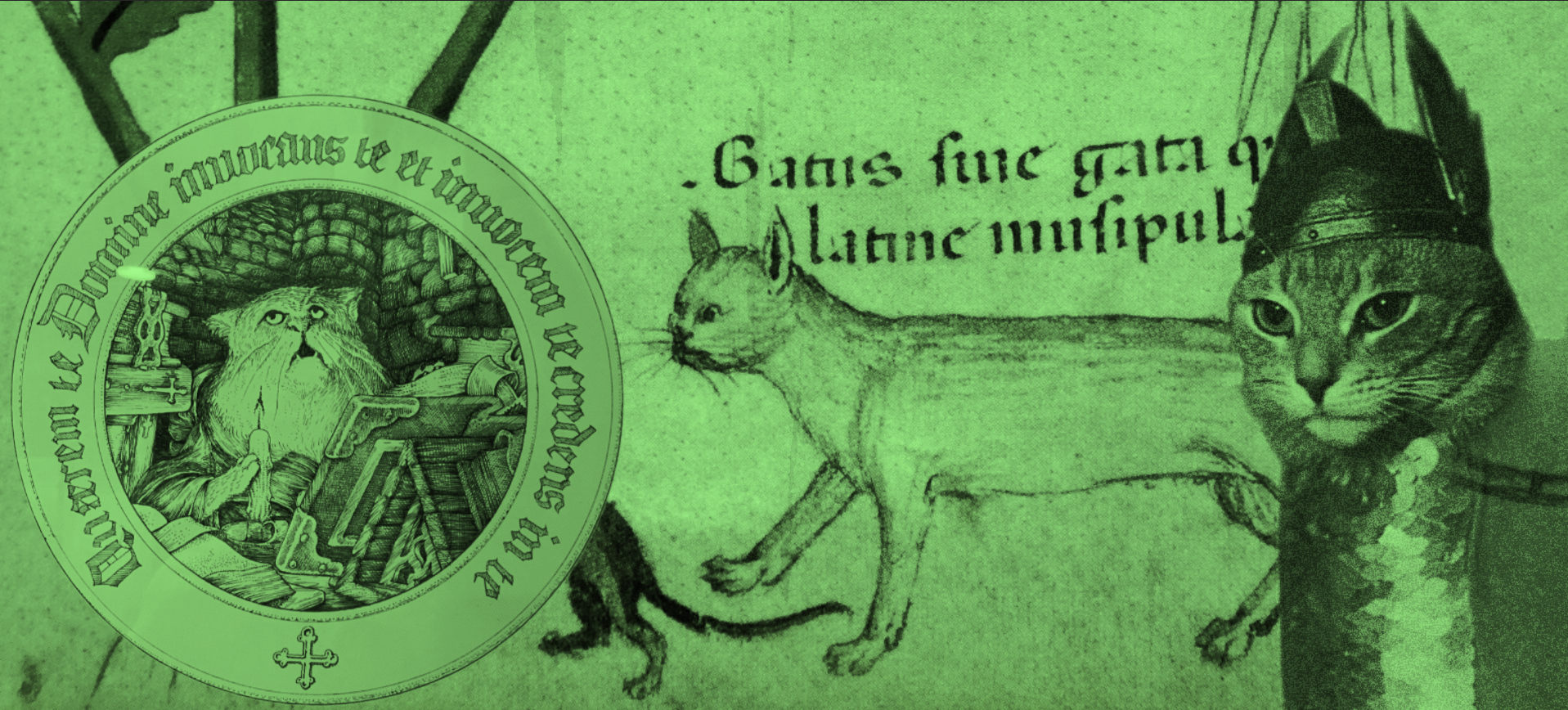
For Kitty & Mr. Eliot“See Greg, if you yell at a dog, his ears will go down and his tail will cover his genitals even if he's done nothing wrong. It's very easy to break a dog. But cats make you work for their affection. You can scold or threaten a feline and never know if you're getting through because a cat protects its pride. Cats don't "sellout" like dogs do. [. . .] And a cat won't kiss your ass for acceptance.”
- “Jack” from ‘Meet the Parents’
What is a cat? One way of approaching this question is to begin with taxonomy. The Felis catus is a member of the family Felidae. Other members of this family include the now-extinct sabre-toothed tiger (Smilodon gracilis), the lion (Panthera leo), the tiger (Panthera tigris), the leopard (Panthera pardus), the cheetah (Acinonyx jubatus), the list goes on. Felis catus is the only fully domesticated member of the family Felidae. As a matter of fact, some wild cats can be domesticated too, but they need to be raised by humans from cubhood. Cheetahs can make good pets, they are gregarious and they like humans, any limitation on keeping such animals are really only practical; their size which translates into considerable feeding expenses, a need for open spaces, but also neighbourly nervousness! Yet, every domestic cat is, in a very meaningful sense, a miniature lion or tiger, that is, a hunter, a predator, a ruthless killer, which lives in your home, sits on your lap looking impossibly cute or curled up in front of the fire. In fact, Felis catusis the apex predator, more so than even the lion or tiger in sheer numerical kills. Its mere presence strikes terror into the hearts of rodents, marsupials, and small birds, which is why if you ever have a mice problem in your home, just borrow a cat for a few days and look forward to a mouse-free home as they flee in short order.
Cat lovers are a special breed, we know that not everyone likes cats (because they don’t understand them), we also know that some conceive of this as an either/or proposition: you are either a cat lover or a dog lover, but this is not actually true. One can be both. It is also not true that cats and dogs are mutually hostile, they can be and often do become the very best of friends, once the dog realises its subordinate place in the greater scheme of things. Dogs who can accept junior partnership in the relationship can look forward to years of rewarding service to kitty. I had a dog long ago and when the cat produced her first litter dog loved nothing more than to babysit the kittens while their mother went out at night to slay any foolish rodents that entered her domain. The dog loved the kittens and in turn they loved her, dog and mother cat were the very best of friends. The real trouble comes if you bring another cat into the home. There may be much hissing and lashing out at each other, but not always. Some cats reach a modus vivendi with each other, but others never will and in such cases a day will not pass without the need for some peacekeeping interventions by their designated human.
The cat-human relationship is fascinating. We normally refer to a dog’s human friend as a ‘dog owner’ but the phrase ‘cat owner’ makes no sense. No cat is owned by its human friend, if anything it’s the other way round. If cats could speak they would probably use a phrase like ‘my human’. Cats are experts at training their humans to meet their needs from opening a door or a window to giving them food or cuddling them whilst whispering sweet nothings into their ear. The ancient Egyptians must have been exceptionally well trained by their little friends because they worshipped them, through the feline goddess Bastet. Many mummified cats have been recovered accompanied with mummified mice to provision them for their journey into the afterlife. Ancient Egypt sounds like cat heaven, in this life.
Moments of affection will be on the cat’s terms – there are exceptions – and they are adept at letting their human know when that is required. For a deep and successful friendship, understanding feline body language is essential; when they are hungry or thirsty, needing stimulation, over-stimulated, anxious and the most difficult of all, determining if they are in pain. Getting the relationship right depends on knowing when to let them be. There is that moment of intimacy when your cat will display great affection, when all the stars align, and experiencing this will put paid to all the stereotypes of feline aloofness and haughtiness.
The oldest surviving Gaelic poem, Pangur Bán, is all about the friendship and kinship that exists between the scholar and the cat: “I and Pangur Bán, my cat, 'Tis a like task we are at” he hunts mice, the scholar hunts words, and they are both solitaries, “Better far than praise of men, 'Tis to sit with book and pen”, but the cat too is an intellectual, “When at home we sit and find, entertainment to our mind” and just as “a mouse will stray in the hero Pangur's way” so too “my keen thought set, takes a meaning in its net”. Just as the cat is ever alert watching the wall for the appearance of rodents, the scholar “'Gainst the wall of knowledge I all my little wisdom try”, and both perfect their art through daily practise and absolute dedication. Both are hunters, and while the cat bags mice, the scholar in his hunt for knowledge is single-mindedly devoted to “turning darkness into light”.
George Bernard Shaw, not someone the present author would usually quote approvingly, supposedly said: “Man is civilised to the degree that he understands the cat”. The dog can be trained, even dominated, but the human-cat relationship is based on mutual recognition, it is an ongoing job of work, and points the way for any genuine relationship which must, as such, be founded on a mutual respect for boundaries, which seems also to be the basis for any meaningful notion of civil society.
The cat is the perfect companion for the solitary figure, the scholar, the introvert, for they both share the deep kinship of those who care nothing for social approval and who are uncompromising in their freedom and independence, but as Mark Twain wrote in a diary entry dated 1894:
“Of all God's creatures, there is only one that cannot be made slave of the leash. That one is the cat. If man could be crossed with the cat it would improve the man, but it would deteriorate the cat.”