Anthropic Clampdown: Ireland’s Place in the AI Cold War
Anthropic and Corporate Disciplining
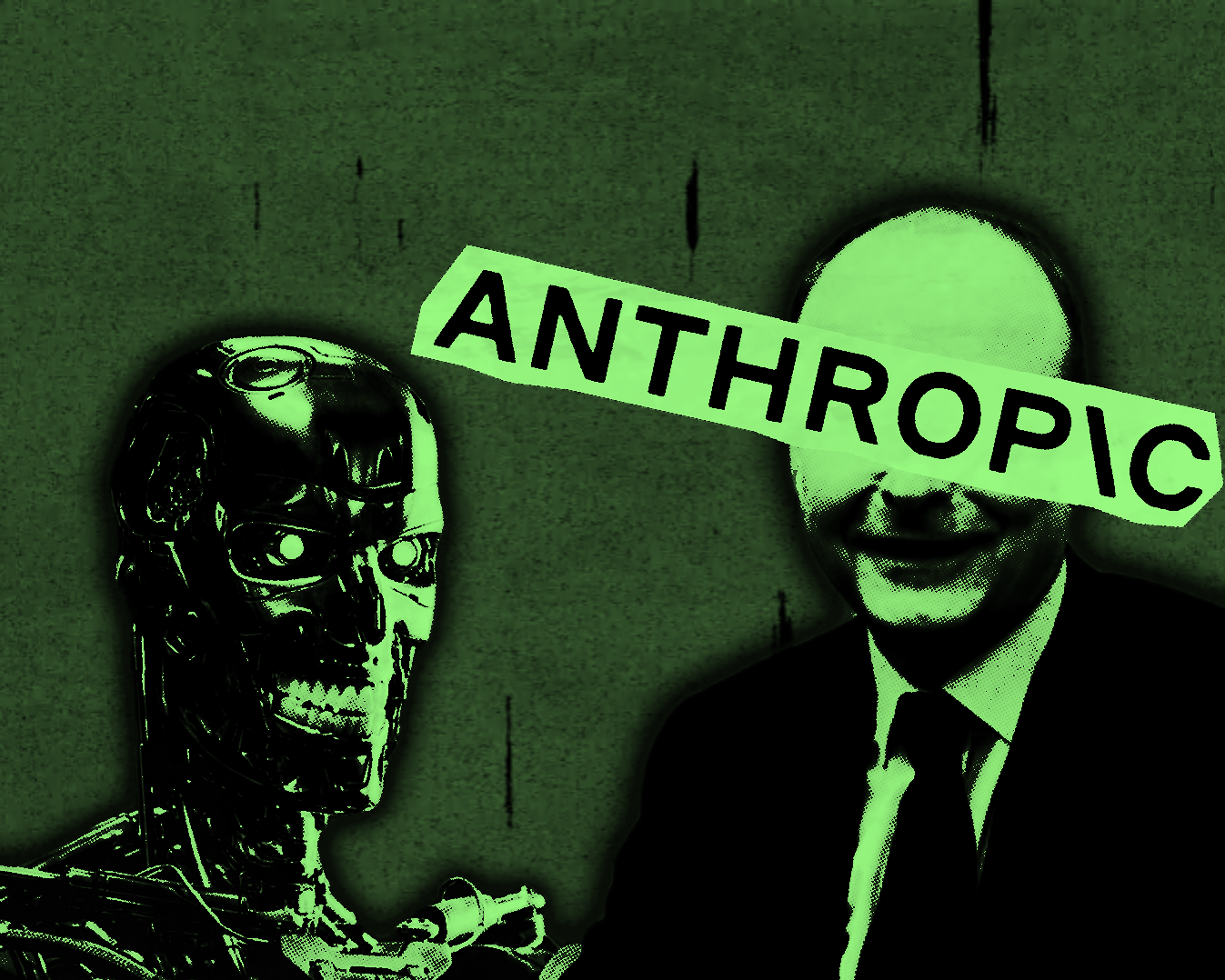
Citing national security concerns, the Trump administration has cracked the whip against Anthropic and its range of AI products with a decision to install export controls of Mythos 5 for all foreigners, both within and without of the United States.
Buoyed on by a targeted lobbying campaign inside the administration spearheaded by Amazon and security hawks who referenced the potential access of the top level technology by China, Anthropic was forced to pull a range of products Friday.
The decision has resulted in cascading chaos among AI regulators for fears that US hard power would bleed into the AI industry, not least in Brussels where the European Commission is currently preparing countermeasures to safeguard what Eurocrats refer to as ‘digital sovereignty.’
For context the past year has seen Anthropic clash swords with the US Department of Defence over the use of the company’s technology in the American military industrial complex with Secretary of Defence Pete Hegseth referring to the corporation which pioneers strict guardrails on AI as being ‘woke’ for failing to acquiesce to Pentagon demands.
The culture war rhetoric belied a wider industrial pivot
The official rationale is that Fable 5 and Mythos 5 could allegedly be used, or jailbroken, to assist in identifying software vulnerabilities or cyberwarfare. The broader game here is placing the sector under the umbrella of US national security policy following the emergence of a challenge from China in the form of DeepSeek and other bootstraps.
If not already, AI models will be treated like dual-use strategic assets, closer to missile components, or advanced semiconductors as the great game against China intensifies.
The move over the weekend further buried illusions Silicon Valley had about its place in the pecking order. Whereas since the Clinton era, Big Tech has presented itself as borderless, if not entirely post-national, these export controls cut through that fantasy.
The state willed it and Anthropic complied. The nerds lost, the hawks won.
The US wants its AI stack to dominate globally, and on American terms. Trumpism meets the AI revolution. That means American chips and standards with the White House holding the ultimate kill switch, something that the European Commission and even the Department of Taoiseach knows.
While in Mayo Canadian Prime Minister Mark Carney explicitly described the Anthropic episode as a warning about overreliance on a limited number of American AI providers. European allies can use American AI, but not as an unconditional commodity. Just like NATO or Five Eyes intelligence they use it inside a US-controlled security architecture with no questions asked.
The End of Ireland’s Old Digital Bargain
For us at home the contradiction is this: Ireland find itself within the confines of American Capitalism and a European legal framework.
Events in Washington will surely weigh heavily on the IDA as well as Anthropic’s Dublin base of operations following the media fanfare that saw them expand their Barrow Street headquarters in March.
Dublin is becoming a major waystation for AI giants and traditional tech-titans with Microsoft, OpenAI, and Google having their EU regional hubs in the city as the Republic of Ireland braces itself to become the EU’s AI regulatory enforcer starting with the launch of a statutory office this year. Already a raft of ideologically driven NGOs and lobbyists are working on carving up the AI Office and the statutory power that would bring.
The Department of Enterprise has chosen a distributed AI Act implementation model, with the AI Office coordinating competent authorities such as the Central Bank, Coimisiún na Meán, the Data Protection Commission, and others.
The most obvious take is that Dublin sits squarely in the middle of an emergent transatlantic AI schism as Europe scrambles to wean itself off American technology with the clampdown against Anthropic seen by many insiders as a way for Washington to take unilateral power over Silicon Valley companies.
Export controls are already commonplace with the production of semiconductors and a sign that the US now sees AI technology as part of its wider industrial strategy of strategic protectionism.
In short the AI companies Dublin hosts despite their address will be icnreasingly governed by Washington's national-security priorities rather than purely commercial logic despite potentially paying tax to the Irish revenue.
As much as Taiwanese semiconductors, Ireland must understand that AI firms hosted in Dublin may be treated by Washington as part of the China-containment perimeter. No St Patrick’s Day shamrock bowls or diaspora nostalgia will negate the national security angle DC is now enforcing onto AI.
The Irish AI Office active shortly may increasingly find itself not merely regulating AI but refereeing a major transatlantic conflict in the year to come part of the Europeanisation of Irish state capacity.
Under this Europeanisation, domestic institutions increasingly become implementation arms of EU-wide governance. GDPR did this with data protection. The DSA did it with platform governance. The Green Deal and Ukraine sanctions did the same with green and industrial policy. The AI Act now does it with algorithmic systems.
Reluctantly for now Ireland has to accept that Europeanisation may not always suit its instincts, its economy, or its Atlantic habits but it is now a field on which Irish sovereignty must be exercised. Brussels rulemaking and Dublin’s Big Tech infrastructure are no longer separate files. They are the architecture through which Ireland will mediate between American technological prowess and European regulatory ambition.
To be clear our state will live or die by this mediation.
For two decades, Ireland's digital strategy rested on a relatively simple bargain: to attract American technology firms, host their European operations, and become the gateway between Silicon Valley and Europe pocketing the tax revenue for good measure.
The fiscal and arguably social la la land Ireland inhabits is thanks to being in this goldilocks zone. The securitisation of the AI sector is bad news for Dublin. Hosting AI companies or even regulating them is not the same as controlling them.
Anthropic’s Dublin expansion is economically significant and bodes well for the state’s digital strategy (thanks data centres), but the export-control order underlines a core structural weakness. Irish offices and Irish compliance teams do not necessarily translate into Irish (or even European) control.
Ireland’s AI Emergency Began This Week…
The first question is brutally simple as the AI rollout occurs: what Irish systems would break if Washington switched off a model overnight? AI is not just a chatbot function on a government website, but the architecture upon which our state may soon subsist.
Departments should require every major public body and critical-sector operator to identify which foreign AI models, APIs, cloud providers, and vendors they rely on now before the sector is further securitised. Ahead of a national rollout any state service using frontier AI should have an EU-based alternative ready if Washington, or even Brussels, or a vendor cuts access overnight.
Rather than diminishing the state’s ability to police its own borders, our AI Office should not just be a compliance shop like the Data Protection Commissioner; it needs a unit linking Enterprise, Foreign Affairs, Justice, Defence, the NCSC, IDA, and EU AI bodies with a firm national security mindset.
Above all else Dublin should seek early-warning arrangements with Washington so Irish and EU users are not blindsided when US national-security decisions affect AI services hosted here.
During the Second World War, the Irish Free State survived by carefully managing exposure to rival powers; in the AI age, the same instinct will be needed again, only this time the contested terrain is not ports, but cloud access and algorithmic control.
Carney’s 2026 visit to the Republic captured the emerging moment better than most Irish political commentary has managed.
The Canadian premier’s warning about dependence on American AI providers was not just Canadian national self-interest dressed up as statesmanship, it was a glimpse of the post-American liberal order trying to reorganise itself in real time.
Ireland, Canada, and Europe all see a potential future and want to rebuild a rules-based multilateral world for the world after Trump, but that ambition will mean very little if the operating systems of the future remain subject to unilateral decisions in Washington or Beijing.
As augured by the Aughinish controversy and the rancour surrounding the Occupied Territories Bill, our Republic can no longer afford the comfort of strategic innocence. It cannot pretend that hosting technology firms is the same as controlling technology. It cannot pretend that European regulation automatically equals Irish interest.
If the twentieth-century Irish state was built around the realisation of goals of national sovereignty and cultural particularism (both remain valid in the 21st century), the twenty-first-century Irish state will increasingly be built around mediation between Brussels and the Atlantic as its post-imperial eastern neighbour in London potentially rots away before our very eyes.
Handled well, this position could give Ireland influence far beyond its size. Already the phenomenon is noticeable in Brussels.
Handled badly, however, the same position could hollow the state out. Ireland could further become a wealthy administrative, but socially diminished, shell for foreign technological power. In the age of AI, the states that matter will not only be those with the largest armies, but those capable of governing the systems through which modern life and capitalism is organised. Ireland now finds itself, unexpectedly and uneasily, among them.