
Seán Southism: the Philosophy of Metaphysical Sacrifice and Martyrdom
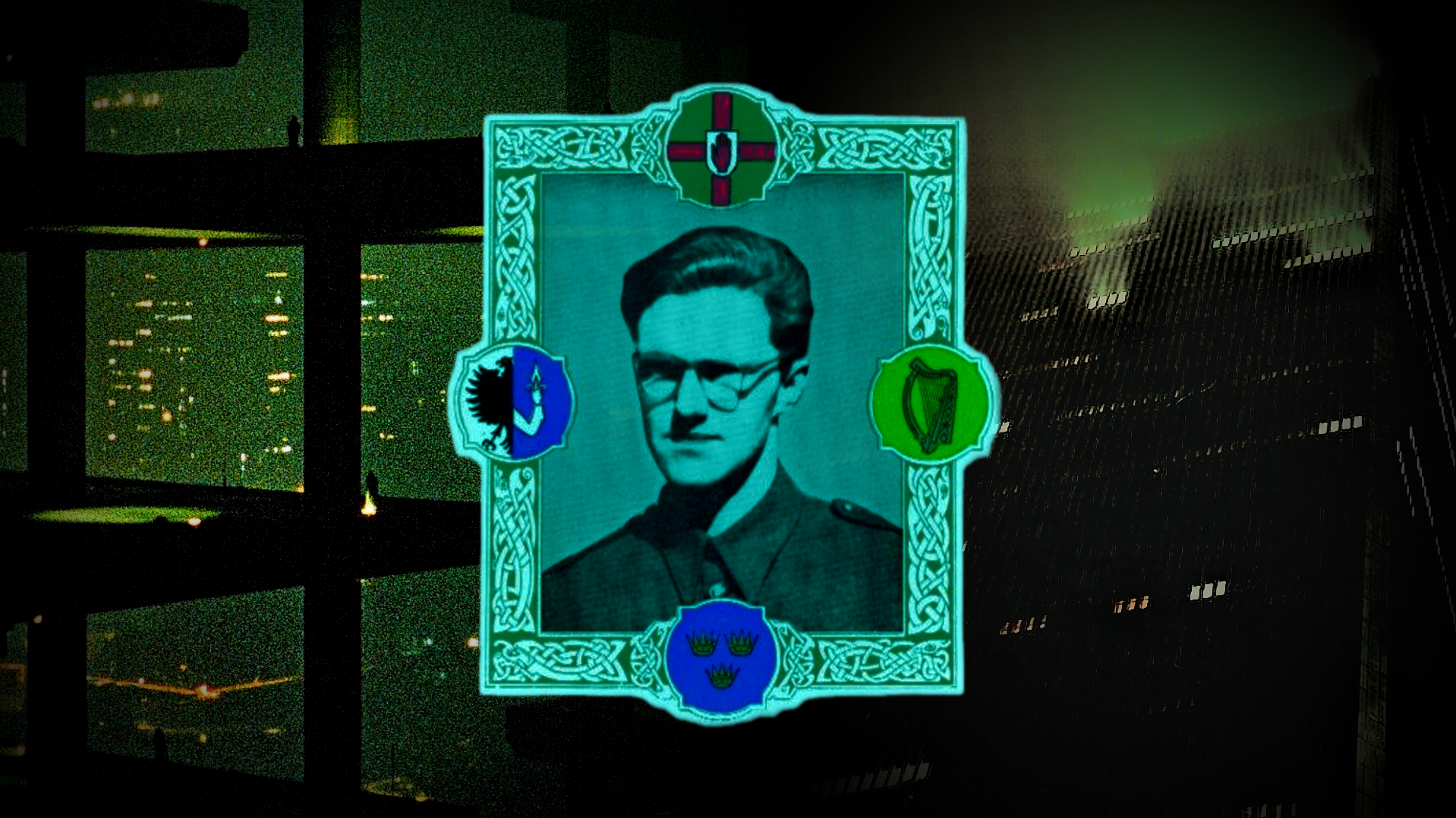
While every side from socialist Republicans to dissident nationalists want to claim the man from Garryowen, truly no one can claim his all-encompassing commitment to reviving the Irish nation.
Individual Manifestation and National Destiny
~
Individual Manifestation and National Destiny ~
You are going to die. It could happen when you’re much older, years from now, or it could happen when you’re still in your twenties, as it did to Seán South of Garryowen. When he died at 28, this is how his native city of unbroken treaty stone paid reverence:
Thit brat ciúnais anuas ar an gcathair, ar an 50,000 duine agus breis a bhí ina seasamh ar dhá thaobh na sráideanna idir an séipéal agus an reilig.—Seoighe, Maraíodh Seán Sabhat Aréir.
(A pall of silence fell over the city, over the 50,000 people and more who stood on both sides of the streets between the church and the cemetery.)
When you die, will there be anything remotely resembling this? Depending on who you are, you may have thousands of followers, and personally know hundreds of people, but would a single see you as a martyr like Seán South?
While you may feel this is an unfair comparison, a large part of this respect for South emanated from his selfless activism. This is something anyone can do! In a Christ-like fashion, he dedicated his life to the dream of an Irish-Ireland, in every imaginable facet.
Whether it be Gaelgeoir organisations, the republican movement, Catholic associations, etc — the young Limerick man was to be found. When he died, all of these groups recognised that a true martyr for old Ireland had passed:
Ansin chual chualathas fuaim aim thomhaiste lucht máirseála: bhí an tsochraid ag teacht-cróchar faoina cheithre chapall; cónra agus Bratach na dTrí Dhath leagtha uirthi; bláthfhleasca a bhí chomh geal sin faoi chlapsholas tráthnóna Eanáir; fiche sagart; agus ina ndiaidh aniar na milte de lucht máirseála. Ar an lucht máirseála sin bhí daoine a raibh aithne acu ar Sheán, agus daoine nár leag súil riamh air dá bhfios; daoine a bhí ar scoil leis, a bhí sna Gasóga leis, a bhí i gComhbhráithreas an Teaghlaigh Naofa leis; daoine a bhí leis i gCairde na Gaeilge, nó i Seadairí na Saoirse, nó i nGiollaí na Saoirse, nó i gConradh na Gaeilge, nó sa Réalt; daoine a bhí mar chomrádaithe aige san Fhórsa Cosanta Áitiúil; agus cuid a throid gualainn ar ghualainn leis go luath roimhe sin sna Sé Chontae.—Ibid.
(Then the measured sound of marchers was heard: the funeral procession was approaching under its four horses; a coffin with the Tricolour laid on it; wreaths that shone so brightly in the dim light of a January evening; twenty priests; and behind them the thousands of marchers. Among those marchers were people who knew Seán, and people who had never laid eyes on him; people who had been at school with him, who had been in the Scouts with him, who had been in the Holy Family with him; people who had been with him in the Friends of the Irish Language, or in the Seadairí na Saoirse, or in the Gillaí na Saoirse, or in the Gaelic League, or in the Réalt; people who had been his comrades in the Local Defence Force; and some who had fought shoulder to shoulder with him shortly before in the Six Counties.)
By attending, they were not merely mourning the loss of an individual man, but they were paying respects to the mythic ideal in which he so embodied. Seán South did not merely live and die for Ireland, but he in a sense became Ireland, at the very least embodying the spirit and soul of the nation itself.
Mise Éire agus Seán South
~
Mise Éire agus Seán South ~
This process, of identifying one's personal teleology with the struggle of the island itself, is as old as the Milesians. This was first present in the famous Amhrán Amhairghin, when the great mythical bard staved off the magical storms of the Tuatha Dé Danann, off the coast of Bá na Scealg:
Is mise gaoth ar mhuir.
Is mé tonn i dtír.
Is mé fuaim na mara.
(I am a wind in the sea
I am a sea-wave upon the land
I am the sound of the sea)
Ever since these words sprung from Amergin's tongue, they have never left our shores. The Gael is Ireland and Ireland is the Gael.
To live this philosophy to its fullest, one must embrace the radical commitment of South and others of his heroic free state generation. The same philosophy is expressed in the famous Mise Éire poem (as well as the film). The best elucidation of it however, is in the simple phrase:
Is féidir Gaeltacht a bheith in aon intinn aon duine amháin.—sa bhfíseán seo, ag 7:20.
This of course comes from Gaeldom's greatest modern philosopher (a distinct from Fennell's political theory), Breandán Ó Doibhlin. The existence of Ireland, as well its continuance and flourishing, can only begin within each of our individual minds. To transform the spirit of the age we must free ourselves from its mental clutches.
Each individual person who takes upon themselves to Gaelicise their mind is reclaiming another stronghold for our nation. Each time you perfect your solo skills with a sliotar and camán, or you learn another sean nós lament, or discover another fairy mound — you have strengthened the fortresses of your national survival.
As a Gael, you must recognise that you are a depositer of ancient wisdom. Every one of our minds holds a portal into the ethnic consciousness which saved Europe in the dark ages. This is what Christ has bestowed onto us.
Just as our bodies are temples of God, our minds’ are the protectors of Christendom and civilisation. To save Gaeldom within our minds is the first step in the salvation of Europe and the entire world, currently under the yoke of Anglo-American despotism. South understood this revolutionary potential.
The Necessity of Community-Maxing
~
The Necessity of Community-Maxing ~
Of course, the individual nature of Gaelicisation should not be taken to mean self-isolation, it is quite the opposite actually. As we are naturally social beings, only through collective, civic and local action can we fully immerse ourselves in a liberated weltanschauung. Joining mass cultural organisations is the first key here.
Even if one joins too many at first, any level of commitment, dedication and individual will goes along way into inspiring others. This was demonstrated even when South would leave an organisation, the spark of his vitalistic will was strongly felt:
Ach má d'éirigh sé as cruinnithe a fhreastal níor stad sé riamh de bheith ag saothrú ar son na hÉireann is na Gaeilge, ach é i gcónaí ag scríobh, ag déanamh líníochta, ag spreagadh is ag gríosú cách trína dhea-shampla féin, agus ag síorstaidéar chun go mb'fhearr an treoir a d'fhéadfadh sé a thabhairt. (Seoighe, Mainchín, Maríodh Seán Sabhat Aréir, lth. 90)
(But if he stopped attending meetings he never stopped working for Ireland and the Irish language, but always writing, drawing, encouraging and inciting everyone by his own good example, and constantly studying so that the guidance he could give would be better)
This community-maxing also translated into his intellectual pursuits. He was deeply engaged in public policy debates, and intellectually wrestled with the great maverick thinkers of his day. Seoighe reports that national banking and financial reform was a major interest of his. He steamed through the work of figures such as Denis Fahey, Berthon Waters, F. Soddy and many others (ibid, lth 98).
For Sabhat, dedicating one’s life to ár gcultúr dúchais did in no way demand philistinism or provinciality, it was quite the opposite actually. For him, the process of saving our country required the understanding, and wisdom, as to how to save it.
In going forward with this philosophy, I implore all young Gaels to hold themselves and others to this standard, on and offline.
The Antidote to Laziness
~
The Antidote to Laziness ~
While obviously this pressure should be proportionate to how much spare time people have, everyone has their own part to play in the re-Gaelicisation of our collective consciousness. Whether one is bogged down in wagiedom, running a hectic family, or a student — we can all make small steps.
I’ll start with that which you should be doing anyway:
Be part of your local parish life, and depending on your situation, support those organisations and inviduals who share your values.
Make sure to listen to Radió na Gaeltachta, Radió na Life (for Dubs), etc at least as much as you do anglicised podcasts.
Watch TG4's coverage of GAA, LGFA agus camógaíocht.
Most of this mirrors points I made earlier at the beginning of last year, but what I wish to emphasise now is the philosophy of Seán Southism. This means identifying one’s personal crusade as one with the national cleansing of our nation. To make our wider community anew we must make ourselves anew too.
This means asking yourself, everyday, how are you contributing to the salvation of our nation? What have you done recently to help end partition? How much have you promoted the Irish language recently?
As a Gael, you should be constantly aware of your purpose as a vessel for the salvation of a higher order of civilisation. Internalise this, and make your mind a fortress against degeneration and anglicisation, like the great men of the Long Kesh jailtacht.
If you are not ethnically conscious, you are not actively defending, preserving and growing your own cúltur dúchais, then you deserve to replaced by anglicised slop and philistinism.
The essential moves you can make are these:
Gaelicise your surroundings: look out for ciorcal comhrás, pop-ups and use apps like this to continually network with your fellow Gael.
Volunteer: support independent institutions and civic groups that are continuing the dream of old-Ireland — if you don’t have the time, donate now and again.
Stop craving knowledge, and actually utilise it: learning one ancient paidir or sean nós amhrán is infinitely more powerful than a million books. Whether you’re praying, singing or writing — use your knowledge!
The main kernel of Seán Southism in my view was best expressed by Pangur Bán:
“to provide the means for the ‘Irish’ to become ‘Gaels’” — from “What is the purpose of an Irish state?”