
Enoch Burke’s Pyrrhic Stand: All Sacrifice, No Strategy — Part 1
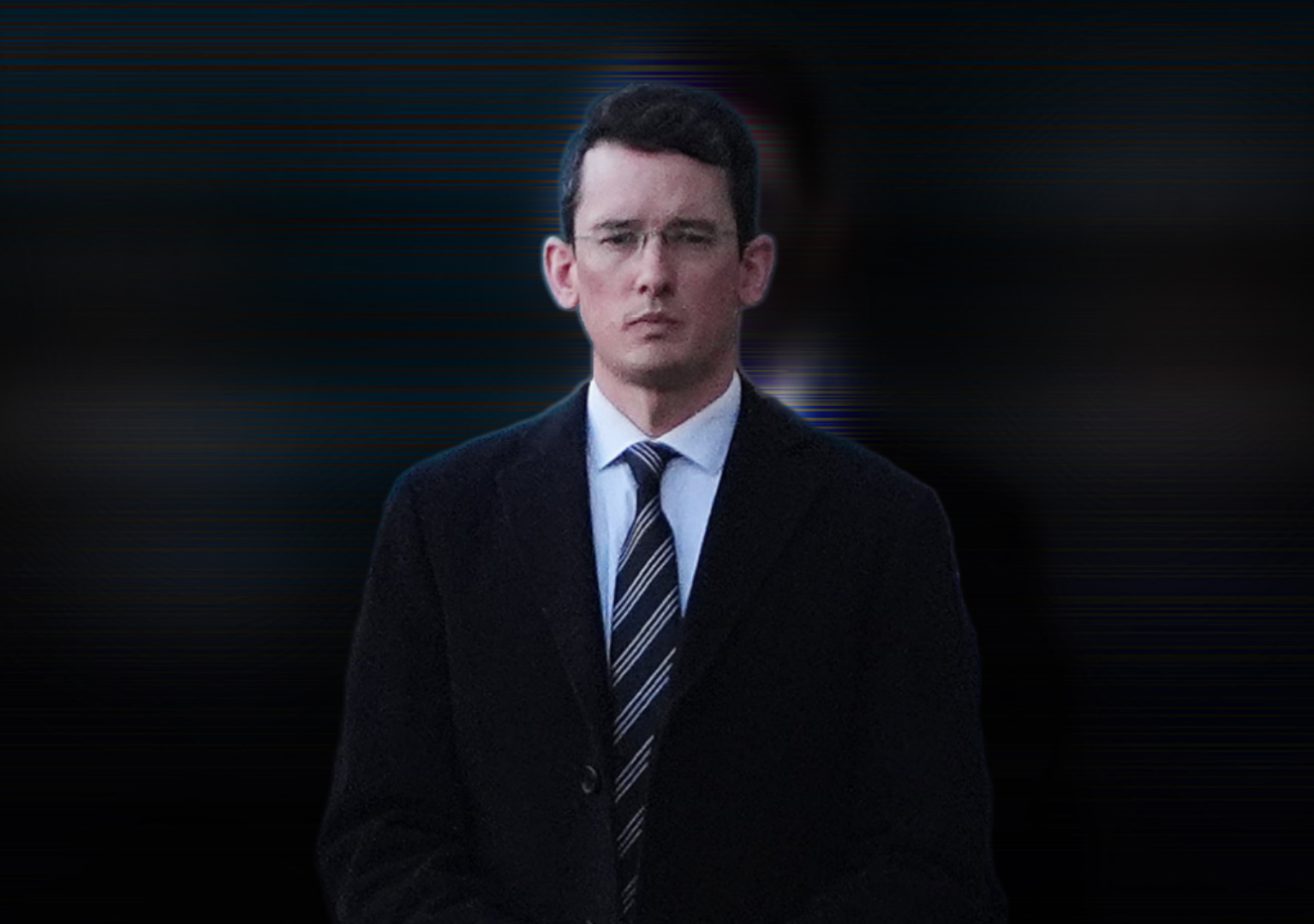
Groundhog Day at Wilson’s Hospital School
On 9th May 2022, the principal of Wilson’s Hospital School sent a request to all staff teachers directing them to refer to a particular student by ‘they/them’ pronouns. This was not the first time the principal had sent out such a pronoun request, and nearly all of the teachers at the secondary school followed her direction without complaint. For Enoch Burke however, a thirty-four-year-old history and German teacher, the direction was simply unconscionable.
What followed Burke’s objection was a three-and-a-half-year ordeal that saw him suspended, dismissed, imprisoned, fined, bankrupted, and vilified. His legal case against the school resulted in approximately 35 court hearings, 40 court orders, 7 Garda removals from court, thousands of news stories, hundreds of thousands of euros in expenses, and millions of social media impressions — and yet nothing has resolved.
It has resolved nothing because Burke still wishes to return to the school as if he still teaches there. He is now being held in Mountjoy Prison for the fourth time for breaking a court order barring him from the school. The courts have now vowed that he will not be released again until he purges his contempt. Given Burke’s record of maintaining his contempt for over 500 days in prison, it would appear that he may now be imprisoned indefinitely.
However, the deeper question in the Burke case is not about his endurance, but about his fate. Was Burke doomed to end up in Mountjoy Prison for defying an instruction to use ‘they/them’ pronouns, or was another destiny possible for him? What Burke, and many of his supporters, fail to realise is that his fate was not a fait accompli, but the predictable outcome of his strategy, or lack thereof.
Burke and his defenders on social media tend to oversimplify his case as one of religious persecution, where a Christian teacher was supposedly imprisoned for refusing to go along with ‘transgender ideology’. On the other hand, Burke’s critics, particularly those working in legacy media, deny any association of his case with so-called ‘transgenderism’, and instead frame it solely around his disobedience of court orders. The case has thus become a flashpoint in Ireland's own ‘culture war’, with political opponents utilising Burke’s campaign as a tool to polarise public discourse even further.
What both of these competing narratives omit is the fact that Burke had expressed very strong legal arguments during his campaign, but an abysmal legal strategy. The reality of what happened in the Burke case is more abstruse and quixotic than either side in the culture war has been willing to admit. If Burke had solicited legal counsel from the outset, he could very easily have built a strong test case around the meaning of gender as a term in Irish law and his constitutional rights. Had he followed this strategy, he might have even been able to place the current political consensus on gender under serious judicial scrutiny. However, Burke’s lack of legal counsel meant that he did not pursue his claim through the proper legal channels, and he never even came close to vindicating the constitutional rights he claims to uphold.
Instead he now sits in Mountjoy Prison under indefinite imprisonment with legal debts and criminal charges looming large in the background, and while his family faces a similar prosecution and potential imprisonment. For the jaded spectator of the Burke saga, the question becomes: how did it all go so wrong?
A Man Possessed
On Tuesday 18th November, High Court Justice Brian Cregan ordered the latest re-imprisonment of Burke. In passing down his judgment, he said that new fines and security guards had failed to stop Burke from trespassing at the school, and that he and his family were engaged in “the most deliberate, sustained and concerted attack on the civil courts and the rule of law in this country in recent times”.
He went on to characterise Burke as “a baleful and malign presence, an intruder”, and concluded that Burke was willing to “sacrifice the pupils of the school on the altar of his fanatical campaign against transgenderism”. Cregan echoed the language used by Burke’s mother Martina two years ago when she accused the courts of “prostrating at the altar of transgenderism”. His remarks indicate the courts are now taking their gloves off in regards to the Burke case and that they will deal with him and his family in a more direct manner than they have hitherto done.
As of time of writing, Burke is being held in prison for civil contempt of court, and he will soon be charged with criminal contempt of court. Burke has previously denied that he is in contempt of court, instead claiming to be a teacher who acts in accordance with his constitutional rights. Burke's denial of his contempt is but one example of a deeper interpretative problem, as his interpretation of what the dispute with Wilson's Hospital School has been about bears little to no resemblance with how the courts and the school board have interpreted it. For Burke, the dispute represents a violation of his constitutional rights due to what he calls “transgender ideology”. However, the school board denies this framing, and instead claims that the dispute was about Burke’s violation of their policy of “inclusion” and his gross misconduct towards the principal. The courts ultimately sided with the framing of the school board after trial, stating that Burke “entirely misconceived” his case and that it had little or nothing to do with ‘transgenderism’.
But has Burke entirely misconceived his case, or does it have something to do with what he calls “transgenderism”? Did the courts want to avoid any discussion of the thorny issue of transgender children? Or was it Burke’s defiant behaviour which let them off the hook and allowed them to ignore the elephant in the room? What is unfortunate in the Burke case is that it was his own contempt which gave the courts the cover to avoid dealing with the contentious legal and moral questions which evidently concerned him.
As a result of his contempt, Burke sacrificed a great deal for what he claims to be “the cause of religious freedom”. He insists he is being punished for professing his Christian faith and for “not calling a boy a girl”. But was it anti-religious bias in the courts that led to his current predicament, or his own strategic error? To unravel the Burke enigma, we have to examine the origins of the dispute and how it escalated into a High Court case. This analysis will lay bare the folly of Burke’s foolhardy approach to litigation, and explain why his self-sacrifice has ultimately harmed rather than aided his cause.
The Pronoun Request
“No, I can't do that, you see, this is the whole point, it goes back to the very first day when I said I cannot do that, when I said it to Ms Niamh McShane, I cannot do that, it's my religious belief. You see, that's a belief I have. God made them male and female. That's a Christian belief I have. It's a conviction I have. It's a good conviction, set down in the First Book of Moses, it's a scripture. That is there. It's reasonable. It's a good belief. It's good for society. I fully and wholeheartedly endorse it, believe it. That's what influences me, pervades my life, my beliefs, my convictions, those good things that I have. They come from God, set down by my Heavenly Father, and I believe them. That's religion. You believe it in your heart and it manifests itself in your actions and your speech. Religion to me is something of the heart and it's truthful. It manifests itself in the life. Christ said: ‘I am the way, the truth.’ He said ‘the truth’, ‘I am the truth.’
…And I must tell the truth.”
— Enoch Burke, the High Court, 1st May 2024
The dispute between Burke and Wilson’s Hospital School began in May 2022 when the then principal of the school, Niamh McShane, sent an email to all staff teachers, including Burke, asking them to refer to a particular student by ‘they/them’ pronouns and by a new name. While Burke was open to using a new name, he refused to follow the principal’s direction to use ‘them/them’ pronouns to refer to the child. He replied to McShane with the following email:
“It is wrong that this belief system would be forced upon students and I will betaking this further. It is an abuse of children and their constitutional rights.”
From the very outset, Burke framed the issue in terms of a “belief system” being imposed, and children's “constitutional rights” being violated. McShane countered that Irish law required precisely what Burke opposed, as the school must purportedly admit students in accordance with their “preferred gender”:
“...The school's Admission Policy includes an admission statement, which affirms that the school shall not discriminate in its admission of a student on any of the discriminatory grounds set out in section 3 of the Equal Status Act 2000. [...]
The right of persons to be called by a name of their choosing and in accordance with their preferred gender is a recognised right and a refusal to address persons by their preferred gender or new name has been held to constitute discrimination on the gender ground.” [Emphasis added.]
In this email McShane equates refusal of a pronoun request with refusal of school admission, but does not explain why. It appears as though she assumes the pronoun request to be a core expression of the child’s identity, and that refusing the request is akin to refusing them as a person. However, the justification of this equivalence is especially questionable in this case because it concerns a child. A request to change a child's pronouns represents an intention to permanently alter their identity for the rest of their life, and cannot be entertained without parental consent at a minimum. However, in the Burke case it would seem that the presence of parental consent was only partial, as one of the parents of the ‘transgender’ child claimed that they did not consent to their child’s “social transition” in the first place as their child purportedly never requested ‘they/them’ pronouns.
If true, this fact gives a very different spin to the entirety of the Burke dispute, as it would appear as though McShane did not ensure that both parents consented to their child’s ‘gender transition’. If so, was Burke right to at least question the request, if not protest it?
Questioning the pronoun request was not tolerated by McShane however, as she insisted to Burke that no input from the school chaplain or from anyone else was necessary. The school was simply obliged by law to fulfil the student’s request, end of discussion.
Unlawful and Unconstitutional
Burke rejected McShane’s answer and described her direction to use ‘they/them’ pronouns as “manifestly unlawful and unconstitutional.” It was unlawful because:
“[There is] no basis whatsoever in Irish law for calling someone they [...] a person must be either of the male or female gender. That’s where it stands in law.”
To assess the standing of gender in law, we have to look at the two main acts governing gender as a legal term, namely the Equal Status Act 2000 and the Gender Recognition Act 2015.
The Equal Status Act 2000 specifies that the grounds for gender discrimination are “that one is male and the other is female”. There are no grounds for discrimination for someone who identifies as other than male or female in this piece of legislation.
Similarly, the Gender Recognition Act 2015 allows for someone’s legal sex to be changed from male to female, or vice-versa, but does not allow it to be changed to a gender that is neither male nor female, such as ‘gender neutral’ or ‘gender non-binary’.
Both of these acts refer to two genders only, male or female, and so the legal standing of people who prefer ‘they/them’ pronouns appears moot on this reading of legislation. It would appear as though there is no legal protection offered to those who identify as ‘gender neutral’ or who go by ‘they/them’ pronouns. The principal’s claim that everyone enjoys a “recognised right” to be referred to by their “preferred gender” thus seems tenuous and refutable by someone like Burke. But if so, why was he unable to successfully refute McShane’s claims in court?
In addition to claims of unlawfulness, Burke also claimed that McShane’s direction to use ‘they/them’ pronouns was unconstitutional. Burke believed that the pronoun request contravened his right to free profession of religion —a right which is recognised by the Irish Constitution. Burke comes from a family of Evangelical Protestants who claim to believe that “God made [humanity] male and female” as was written in the book of Genesis. Burke holds this belief to be central to his faith and that it prevents him from calling a boy a ‘they’. Given that he has a constitutional right to profess his faith, it would appear that Burke holds a sound legal argument against a direction to use ‘they/them’ pronouns in the workplace. Although again we must ask, why was he unable to present his argument in court?
Burke’s legal arguments about gender, religious freedom, and constitutional rights were obviously not meritless. A compliant appeal application would have forced the courts to answer difficult questions about how religious rights interact or potentially conflict with rights concerning gender recognition. Yet Burke never managed to present these arguments in court. Part II of this article will examine why his approach to litigation, characterised by amateur litigation and impulsive defiance, produced neither effective results within the legal system nor a principled stand against it.