
Support for Trump: Mental Illness? Reflections After Venezuela
INTRODUCTION
“[T]he name of Schlageter and his tragic fate was in my head” — Karl Radek
An empire pretending to be a Republic, pseudo-legality is key to America's mandate of heaven - a mandate that, at least according to Trump, encompasses and applies to the sovereign of Venezuela, Nicolás Maduro.
The faux-adherence to legality represents the most peculiar way in which the United States of America exercises its hegemony. From the show trials of Nuremberg and Tokyo (retroactivity be damned!) to the bombing of Serbia in 1999, America’s abidance of legality is at best half-hearted and, at worst, it constitutes a form of gaslighting - an added insult to the charred victims of the star-spangled leviathan.
That this latest episode is a flagrant affront to international law need not be contested. Nor is one credulous enough to buy the Madura-drugs-kingpin narrative trotted out as the rationale for subverting Venezuelan sovereignty. The imperative lay elsewhere - oil perhaps, as hackneyed as the "war for oil" narrative is.
This essay concerns itself not with prognostications. Rather, I am interested in the reaction on the right, and how this conflict, as well as the tension that preceded it, has been framed. For beyond geo-political and financial imperatives, there is an ideology - more accurately, an incoherent picture of the world, made up of loose, conceptually illiterate, associations and assertions - underlying the capture of Maduro.
Maduro’s capture is symptomatic of the floundering of American legitimacy, the hubris of facile imperialistic posture, and, above all, the false consciousness of the American right. Visibly shaken by the Epstein scandal, not to mention the caustic assails from the right and left alike, the Trump regime sought a new target, a new enemy to engender a rebound of loyalty from its base.
Without exaggeration, it may be fairly said that the right wing of 2026 is cattle. As befits their bovine, thrall nature, any excuse, no matter the previous betrayals, any cope, irrespective of the lies it conceals, seems sufficient to keep them on the Trump plantation.
TRUMP LOYALISM: PATHOLOGY
The left-right divide is the prism through which we view politics. Even among revolutionary cadres, say the Bolsheviks of yore, we witness its stubborn persistence. Why this is the case is beyond this article’s scope, but that we will continue to think in such dualistic terms is certain.
Pinning down what ‘left’ and ‘right’ means is a tricky task. Some scholars stress the contingency of said categories. Others places an emphasis on the continuity of ideas that link a particular side, despite changing circumstances.
Beyond the never-ending, even fruitless quest to determine their essence, mere observation demonstrates that each side is complemented by a relatively enduring psychological profile. Arguably the seminal, albeit not definite, contribution to explicating right and left wing psychological types, is Jonathan Haidt’s The Righteous Mind.
Of the traits which psychologically distinguish conservatives from liberals, perhaps the most pronounced is their need for a leader. The liberal longs for institutions; the rightist longs for a saviour - this fixation is complemented by another enduring facet of the rightist purview: decline.
From folktales regarding a resurgent Stuart Monarchy that pervaded the collective consciousness of the Irish and Gaelic Scots of the 18th century, to French Catholics, caught up in the unstable morass that was the French Third Republic, who pined for an executive manned by General Boulanger. To conquer the abyss, a great man is needed - so the rightist supposes.
An instance of this line of thought may be found in Thomas Carlyle’s ‘On Heroes, Hero-Worship, & the Heroic in History’:
“But I liken common languid Times, with their unbelief, distress, perplexity, with their languid doubting characters and embarrassed circumstances, impotently crumbling-down into ever worse distress towards final ruin;—all this I liken to dry dead fuel, waiting for the lightning out of Heaven that shall kindle it. The great man, with his free force direct out of God's own hand, is the lightning. His word is the wise healing word which all can believe in. All blazes round him now, when he has once struck on it, into fire like his own.”
My motives ought to be clarified. I am by no means affirming that such an attitude is inherently myopic or lacking in robustness. There are times of decline - yes. Of the complex constellation of causes, the engine of history, underpinning world events, great men are a factor to be countenanced - their role being preponderant in the founding of grand religions and ideologies, less so in the case of day-to-day matters such as commerce. At issue is the reflexive, uncritical analysis and proposals that flow from such a prism.
In the case of Maduro’s capture, much of the right has enthusiastically endorsed it. “Finally”, they orgiastically exclaim, “we’re taking action!”. Liberalism, envisioned as a heavy set, menopausal woman - a teacher or HR lady, perhaps - has ensconced us from doing what needs to be done via byzantine rules and procedures, not to mention moral hectoring. The inference is obvious: the capture of Madura is a re-assertion of masculinity — Maduro transmuted as a scapegoat for sublimated rage against one’s b*tch wife.
Being impotent, their agency must necessarily be projected onto an exterior figure or symbol - man and semiotic dovetail in Trump. We may dispense with the notion of ideology at this stage, for Trumpism constitutes less an ideology than a fetish: a father fetish for the inert who despise their impotence. They live, truly live, vicariously through him. In actuality, they’re akin to a battered wife suffering from an acute case of Stockholm Syndrome. The MAGA base is content with Trump’s serial infidelity: from foreign interventions to his statements regarding H-1B.
If the past portends the future, then there is no reason to be optimistic; the past illuminates a grim prospect: that they shall remain acolytes, obsequiously deferent to the at least we’re not the left doggerel rhetoric curried to them by their masters. Perhaps such people deserve to be replaced — consumeristic portly swine that they are. Opine as I may, unless they choose to suspend their white trash, fly-over-state permutation of great man worship for the sake of an ideology fit for their epoch and its imperatives, this - replacement - will be their future.
RED SCARE — RED HERRING
For the cynic, politics is a game of deceit. It follows as a corollary that politicians are liars. Lest one be under the impression that equality reigns amid the domain of rodents, in truth the obverse is the case: a great chain of being demarcates each in a celestial hierarchy. At its apotheosis, we have the great liar(s) of history, the uromys rex whose rich, sumptuous duplicity serves as an imminent theodicy.
The lies of the Trump regime represent the antipode; by nature chimerical and graceless, they lack the dignity to seduce the victim — their churlish, tumbling idiocy adding insult to injury. We are told that socialism is the mortar that holds the enemy coalition together - from Mamdani to Maduro, the Commitern's posthumous hand exercises its insidious agenda planetarily. Recycled red-scare rhetoric — really? This is the rallying point to support their Caudillo-ship. BASED™ authoritarianism in the service of a Latin-X future. Reality is the unfolding of David Dees’ mind.

AMERICAN DECLINE
The must-see blockbuster extravaganza that defined your childhood is BACK — and now in 4D!
Only in select cinema$
The Cold War was an inter-continental struggle, the outcome of which decided the contour, texture, and nature of globalism — the stakes were real, the lives of millions hung in the balance; state executives possessed prerogatives heretofore unimaginable. The red scare was not a paroxysmic reflex against a phantom — one purportedly contrived by pathologically paranoid patriots of HUAC. The Soviet threat was real: her agents had infiltrated the White House since the ‘30s. To call the circumstances of the USSR’s recognition by America dubious is an understatement. That membership of the Comintern entailed loyalty to the Soviet Union in times of war, over and against one’s nation, is sufficient to spell out the subversive intent and effect of the International.
“[T]he first time as tragedy, the second time as farce” — when reflecting on the neo-red scare, one is tempted to invoke Marx’s much-quoted adage. But the context in which these words were written should not escape us. Marx’s ‘The Eighteenth Brumaire of Louis Bonaparte’ is the source — an analysis of Napoleon III’s rise to power, and the forces of French society which led to his ascension. Whatever may be said about the man — and much has been said since Sedan! — Napoleon III is nevertheless the figure responsible for modern Paris. Sources have informed me that Baudelaire objected vociferously to his architectural tampering. Since his time, Paris syndrome has afflicted innumerable others, albeit for vastly different reasons…
If the aforesaid’s rulership was farcical, what may be said of Trump? — The third time as atrocity? He speaks of socialism as a world threat in an epoch characterised by its total demise. Truth may be perennial, but jargon befits the time - Trump’s crusade against socialism is passé, senile even. It would be akin to Xi Jinping fulminating about Japanese designs on Manchuria — that we must consult a counterfactual bespeaks of the sheer sclerosis of the Trump regime.
THE STRANGE DEATH OF MARXISM
Let’s countenance some cardinal facts. The Marxist project is dead. It definitively lost in the 20th century. Contrary to conservative and liberal critics, the record of deaths under nominally socialist regimes is, frankly, irrelevant — humanistic hectoring is incongruent with robust critique. Many of these regimes were cargo-cultist tin-pot dictatorships; Marxism constituted a revolutionary mythos, important for reasons of international solidarity and due to its promethean facet, but in actuality these regimes were forms of developmentalist nationalism. A place in the sun, not a classless, stateless future, was their telos.
In theoretical terms, socialism has been in a state of terminal crisis since Eduard Bernstein’s revisionism. Marxists had proclaimed their ideology to rest on science rather than utopian normative claims, contra earlier variants of socialism, and Bernstein had taken them at their word, arguing that Marxism must therefore be verifiable. Bernstein noted that many of Marx’s prognostications -the falling rate of profit; decline of the intermediate, petite-bourgeois; immiseration of the proletariat; concentration of capital - had not come to pass. If Socialism was a science, then it was clear that its hypotheses had been falsified.
In response to this crisis, he posited an evolutionary, reformist variant of socialism which would, in time, serve as the theoretical basis for social democracy. The inevitability of socialism was forewent; in its place, there was a return to normative, idealistic argumentation on behalf of the industrial working class. Socialism was less a question of revolution, as it was a question of buttressing trade unions, labour laws, and so on. This was a socialism reminiscent of the Lasalle-Bismarck alliance.
Meanwhile socialism was under attack from a heterodox quarter. With a right wing heart and left wing politics, Georges Sorel launched a vociferous Homeric attack on the reformist and orthodox wings of then-contemporary Marxism. For Sorel’s ideal was that appreciable by an Achilles or the elitist democrats of ancient Athens, not the humanists and concession-prone liberals of his time.
He argued that all revolutions rested on sacrifice and the myth which engendered it, not material conditions; he looked to the early Christian martyrs for inspiration. He declaimed that trade unionism had been compromised by its association with the state; that it and the politicos of social democracy had forged themselves a profitable position: that of perpetuating the polarity- but never to the point of revolution! - between labour and capital. Their role was to negotiate this tension — the outcome was obvious: tension forever, revolution never.
Sorel’s revolution was a revolution in the name of moral and heroic resurrection. Capitalists and workers alike were decadent — class war was the panacea which would restore their manly qualities. It goes without saying that Sorel was an enemy of progress and her mongers; utopia would reduce us to bovine, out to pasture perpetually. Such a future is not worthy of man — in this best sense, which may be contrasted with humbug-laden sentimentalism, was Sorel a humanist.
Whether one looks to the idealistic reformism of Bernstein, or the Homeric, palingenetic politics of Sorel, both dovetailed inasmuch as they rejected the emphasis of Orthodox Marxism on material conditions and class interests. The implication of their politics, therefore, was the usurpation of the proletariat as the revolutionary actor. For absent it being allotted a central role in the Marxist picture of history, all that was left to the proletariat were idealistic, normative claims. The nation, for instance, could just as equally make the case for itself.
The proletariat (as well as organised social democracy!) largely sided with their nation during the First World War. Compounded with the racialisation of Marxism during the Sino-Soviet split, — “the white man will not lead us into socialism”, to paraphrase Marx — the proletariat’s role as the variable of salvation in the secular eschaton was called into serious question. De-industrialisation, in my estimation, was the final nail in the coffin. For although Marxists may proffer an abstract definition of the proletariat, in real, substantive terms its power to change society owed to conditions which have since expired.
At best, socialism today constitutes a legacy Banana republic, elite over-production in the first world, or welfarist social democracy — that the later may be appropriated by the right has been recognised by serious Marxists since Weimar (“social democracy is fascism”, pace Stalin).
The proletariat is dead, socialism lost the 20th century, and Trump’s insistence that otherwise is the case should be considered with serious alarm. Why? Put simply, many European states have in place a mixed economy, characterised by a strong welfare state. Trump has slated Venezuela for humiliation, if not destruction. In recent days, he has renewed his postures toward Greenland — land in possession of another “socialist” nation: Denmark.
American foreign policy is being ideologically steered by loose, encompassing, empty signifiers such as ‘Socialism’ — a category inclusive of Maduro, Mamdani, and most European states. That Trump’s regime and the European Union are at odds is well known. Now a further, ideological facet has emerged. I don’t wish to be alarmist; it’s not probable that we’ll see American troops on European soil. That said, it wouldn’t be first time America has waged war on Europe…
To the Americans reading this, I implore you to reject the surrogate politics of Trump’s anti-communism — a motley passé pottage of strong man posturing, inane callousness, and American imperialism. Reject the American empire, abandon the fantastical delusions of a state which cannot police its own borders, nevermind ensure its cities are safe.
CONCLUSION
With the 2028 election a mere three years sway, one wonders what’s next for MAGA. Kirk is dead, Vance is an uninspiring sub-5 subhuman, and Pam Bondi is….literally who? Already Trump loyalists such as Bannon are fielding the possibility of a third Trump term. Perhaps MAGA should look East for inspiration…
In the world of ideas as in elsewhere, contingency forces the unnatural together — such was the case in Russia after the collapse of the USSR. In 1993, during the Constitutional Crisis, Monarchists and Marxist-Leninists found themselves united against Boris Yeltsin. Whatever their differences, both were patriotic and anti-communist, their interface had pedigree dating back to the thirties in form of Smenovekhovtsy, a White Émigré tendency that, with some reservations, reconciled itself to the October Revolution — ‘til they were shot by the NKVD!
Mr. Hexagon, a novel by the Russian author and Bolshevik nostalgist Aleksandr Prokhanov, is an expression of the novo-Smenovekhovtsy tendency of the post-USSR period. In the novel, the question of decomposition and the erosion of time are dealt with, as well as the matter of legitimacy in light of the foregoing. Before proceeding, permit us to cite the evergreen ‘Irreversible’, a family friendly samizdat flick from the belly of the French Republic:
"Shall I tell you something? Time ruins everything"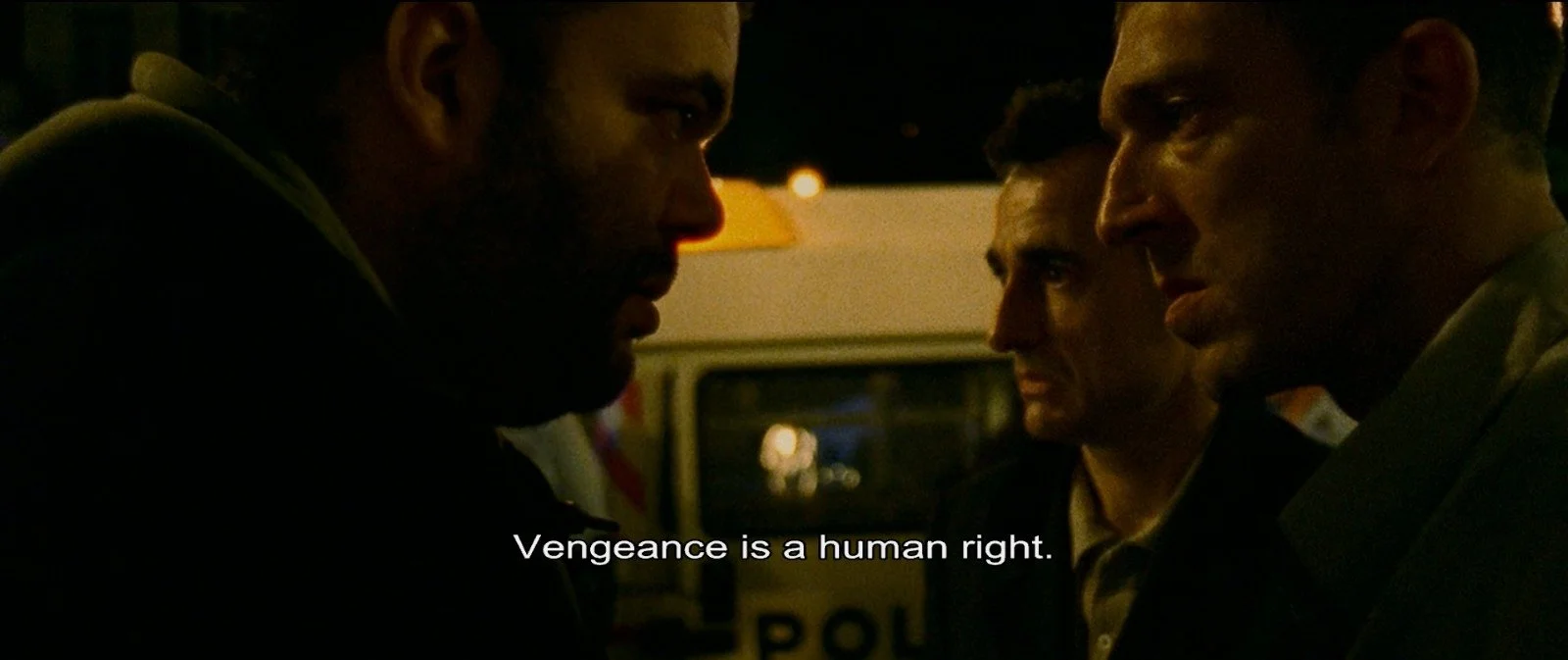
All states rest upon legitimacy, and for Prokhanov Russian legitimacy rests upon Vladimir Lenin. This poses issues that should be obvious to all. Lenin, being mortal and speaking to the affairs of this world, and specifically the issues of his time, lacks the universal remit of the Divine. His message is, ultimately, circumscribed by the Heraclitan world and its changeable circumstances. How to square his contingency as a mortal, limited being with legitimacy, which is necessarily trans-historical. Prokhanov’s character Dr Mertvykh (mertvykh ‘of the dead’) possesses a solution: resurrection! He spells out his vision:
“There are many people in the world working on the problem of immortality: in India, in China, in the Arab countries. We know about one other’s work. The resurrection of Lenin will take place in spring, in Russia, on Orthodox Easter, or the First of May, or Victory Day. The weather will be wonderful, a blue sky, trees and flowers in blossom. The bells will ring out and a prayerful cry will rise from the crowds gathered on Red Square, beneath the sacred walls of the Kremlin. The sun will play and sparkle in the sky, wondrous rainbows will flow around it, and he will step forth from the doors of the Mausoleum: Lenin, alive, bearing light, ‘by his death having trampled down death’.8 Emperors and princes will arise from their white stone sarcophagi. Resurrected pilots, cosmonauts, and heroes will step forth from the Kremlin wall. Across the world, billions of people restored to life will rise from the grave. The universal miracle of resurrection will be accomplished. The ‘red meaning’ will return to our lives, and the Soviet Union will be restored.”
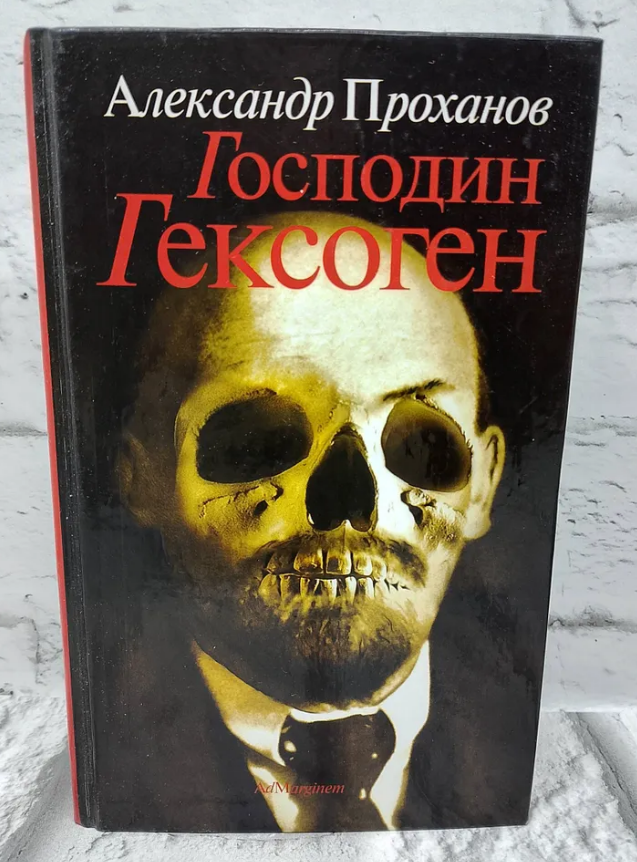
The above-cited monologue has precedent in Russia thought. Consider, for instance, the following passage relating to the Russian philosopher Nikolai Fyodorov:
“For Fedorov, any community that excludes the dead is inadequate; any filial loyalty that does not seek to resurrect our deceased ancestors is a betrayal; and any worldview that rejects universal physical resurrection is no better than a capitulation to the inhumanity of nature. Only the duty of resurrection [voskreshenie] can become a ‘common cause’ to unite all people—or at least all men—as brothers joined together to resurrect their fathers.”
By now I hope that the penumbric digressions I have engaged in have suggested to the reader my purpose: the resurrection of Trump; a perennial necropolis of tasteless, trashy, garishness — its sclerotic, para-human post-posthumous leader fuelled by nectar found only among Balkan women with the proportions of runway models. A golden circle stretching from Greenland to Chile, comprised of a thrall caste of goblinos all listening to Daddy Yankee, the king of Reggaeton. Each fed by slop. Each fact checked by Grok.